Do you operate a collision center or auto refinish business?
If you do, you are likely no stranger to the demands placed upon your autobody spray booths. Vehicles move through prep, paint, and reassembly in tight cycles, leaving little room for delays inside the booth.
When your high-volume automotive paint booth struggles with airflow balance, lighting accuracy, or curing consistency, the entire workflow slows down.
For this reason, automotive paint booth optimization is important to your operations. With it, you can maintain stable conditions throughout the day to support quick turnaround and consistent finish quality.
The Requirements for Automotive Paint Booths
Before you schedule automotive paint booth optimization, you need to know what you’re refining for. More specifically, there are many requirements that your booth system improvements must meet, namely:
Fast Turnaround Across Many Repair Types
A single day may include bumper repairs, full-panel repainting, and multi-panel blending.
A high-volume automotive paint booth must be able to handle this range without slowing down vehicle workflow. To do this, it needs stable airflow and predictable bake performance to allow technicians to move quickly from spray to cure while keeping the repair schedule on track.
Consistent Color and Surface Quality
Drivers expect repaired panels to match the original finish. Achieving that level of consistency requires stable booth conditions during every stage of the coating process.
Proper airflow control, even lighting, and controlled curing temperatures help technicians avoid surface defects such as texture inconsistencies or contamination.
Growing Operational and Regulatory Expectations
Automotive facilities now face increasing pressure to manage energy use, emissions, and workplace safety. Airflow balance, filtration performance, and burner efficiency all influence how well a booth meets current regulatory requirements.
Careful automotive paint booth optimization enables shops to maintain production while keeping operations in compliance with OSHA and other modern compliance standards.
Key Design Features for Automotive Paint Booths
Now that you’re familiar with what to improve, let’s go over how the requirements carry over into design.
There are three qualities every high-volume automotive paint booth should have.
Airflow That Keeps Surfaces Clean and Overspray at Bay
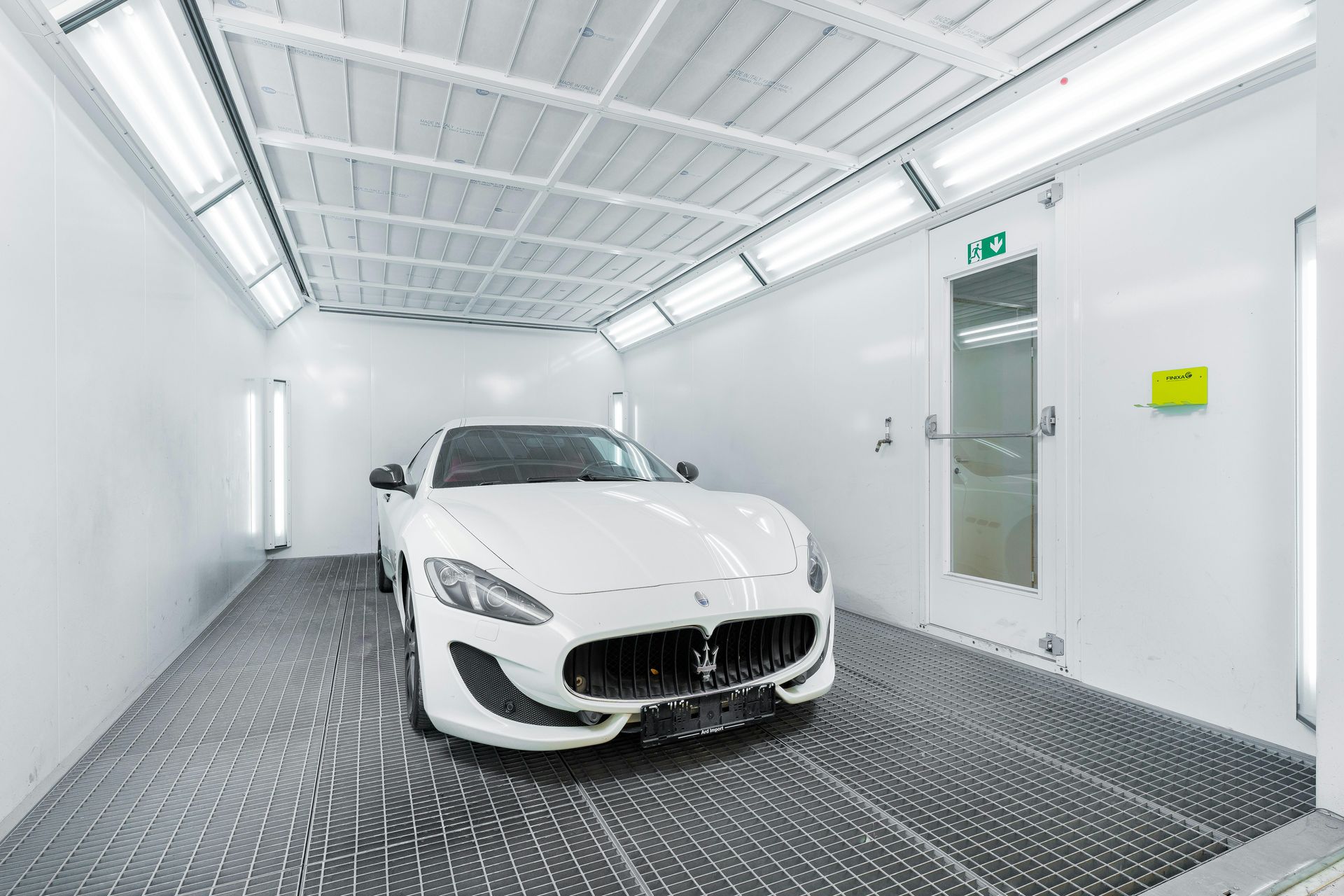
Air circulation determines how overspray and contaminants move through the booth. Downdraft, semi-downdraft, and side-draft systems each manage air movement differently.
With the right booth configuration, your team can maintain cleaner panels and achieve smoother finishes.
Booth Size That Matches Daily Demands
Automotive facilities handle a wide range of vehicles, from compact cars to larger trucks and SUVs. For this reason, booth dimensions must allow technicians to move comfortably around the vehicle while keeping proper airflow.
Even in high-quality open-face auto body shop spray booths, adequate space prevents disruptions in air movement and supports consistent coating results.
Lighting That Reveals Surface Detail
Lighting is non-negotiable for visibility, but there’s more importance than that.
Proper fixture placement helps technicians detect color differences, coverage gaps, and surface imperfections while spraying. Bright, evenly distributed LED light improves color matching and supports accurate inspection before the vehicle leaves the booth.
Process and Workflow Optimization
Paint booth design gets you halfway through. However, even that can fail when your workflows always lead to waste, contamination, and delays.
When it comes to automotive paint booth optimization, one area you can’t overlook is your process. Here’s what your environment needs to keep your spray booths performing at or above standards.
Booth Placement That Supports Flow
Positioning the auto body shop spray booth between prep areas and detailing stations keeps vehicles moving in a clear sequence.
The shorter your movement paths are, the less congestion you’ll see. You’ll also help technicians maintain steady production throughout the day.
Dedicated Areas for Prep and Mixing
Separate prep stations and mixing rooms help control dust and contamination before vehicles enter the booth. Doing this helps prevent technicians from competing for the same work area.
Consistent Spray and Bake Cycles
Standardizing spray, flash, and curing times keeps technicians working from the same process. Predictable cycles reduce variation between repairs and help keep a steady pace in a high-volume automotive paint booth environment.
Technology Upgrades That Support Automotive Demands
These upgrades support your automotive paint booth optimization by improving consistency, efficiency, and day-to-day visibility into booth performance.
Advanced Control Systems: Preset programs simplify common refinish tasks. Technicians select the proper cycle, and the system automatically manages airflow, temperature, and curing stages.
Energy-Efficient Air and Heat Management: Variable-speed fans and efficient burners stabilize airflow and reduce energy use.
Integrated Booth Monitoring: Sensors track airflow, temperature, and filter load.
Maintenance Practices That Protect Quality and Throughput
Once you’ve optimized your auto body shot spray booths, you need to keep them that way. Here’s how:
Filter Changes Aligned with Workload: Regular replacement maintains stable airflow and supports consistent automotive paint booth optimization across daily jobs.
Routine Mechanical Inspections: Early detection of wear in fans, burners, seals, and safety systems prevents interruptions.
Structured Cleaning Practices: Frequent cleaning removes dust and overspray buildup from booth surfaces, reducing contamination and protecting finish quality.
Planning an Upgrade or New Installation for Auto Shops
Follow these steps to refine your current auto body spray booth setup:
Review Current Performance Metrics: Cycle time, rework rates, and energy use often reveal where booth performance limits productivity.
Evaluate Retrofit vs. Replacement: Targeted upgrades can restore performance, while a new high-volume automotive paint booth may better support long-term growth.
Plan for Future Workload: Aligning booth capacity with projected demand helps support efficient automotive paint booth optimization as vehicle repair volumes increase.
Make Your Optimizations Match Your Production Speed
Optimize your automotive shop’s spray booths, and you’ll maintain airflow, lighting, and curing quality as you handle more orders.
Bring your automotive paint operations up to modern standards with an optimized booth solution from GSB Industries. Contact GSB Industries today to review your current setup, explore upgrade options, and design a paint booth configuration that keeps pace with today’s automotive industry demands.