Volatile organic compound limits keep tightening for industrial and commercial paint operations. Meeting them begins with the coating and extends well past it, because application and filtration decide how much solvent and overspray actually leave your booth.
With new VOC regulations, paint booths must now meet standards in spray equipment, technique,
operator training, and filter media. The shops that follow these guidelines not only perform at their peak and profit but also stay open.
Understanding VOC Pressure on Paint Shops
Regulators treat paint operations as a real source of ground-level ozone, which is why VOC regulations for paint booths keep expanding. Knowing where that pressure lands lets you plan for it rather than scramble.
What the Limits Touch
VOC caps shape which coatings you can buy, how you document their content, and how you report emissions. Those caps rest on firm numbers.
Federally, national standards cut the VOC content of automobile refinish coatings enough to lower emissions by about a third from the 1990s baseline, and many states go lower still.
The Cost of Falling Short
Partial compliance still leaves you exposed. A booth that leaks overspray or a coating over its limit can bring fines, failed inspections, and downtime while you fix it, and the cost rarely stops at one incident.
If left unchecked, repeated violations invite closer scrutiny and strain your standing with neighbors and permitting authorities, which is harder to rebuild than any filter.
Innovations in Low-VOC Paint Application
The most direct way to cut emissions is to spray less solvent and waste less of what you spray. Three shifts in how shops apply coatings make that possible.
1. Waterborne and High-Solids Systems
Waterborne basecoats and high-solids coatings carry far less solvent than the lacquers and enamels they replace, which is why they anchor most low-VOC work. Because they hold that lighter load, they meet VOC limits without sacrificing color match or durability, and most refinish shops have already adopted them.
The catch is that this chemistry flows and dries differently, so your booth conditions have to keep pace.
2. Compliant Spray Equipment
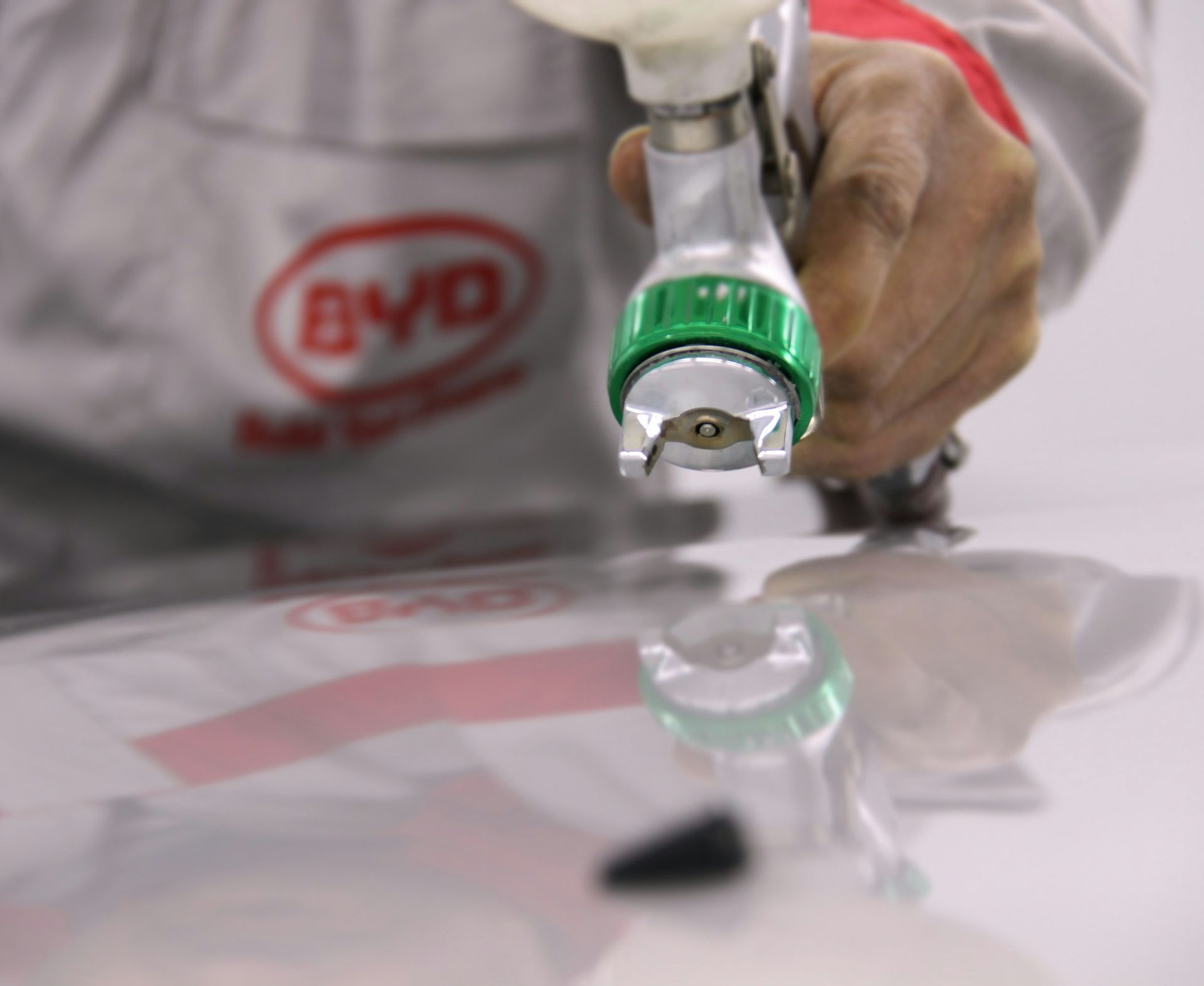
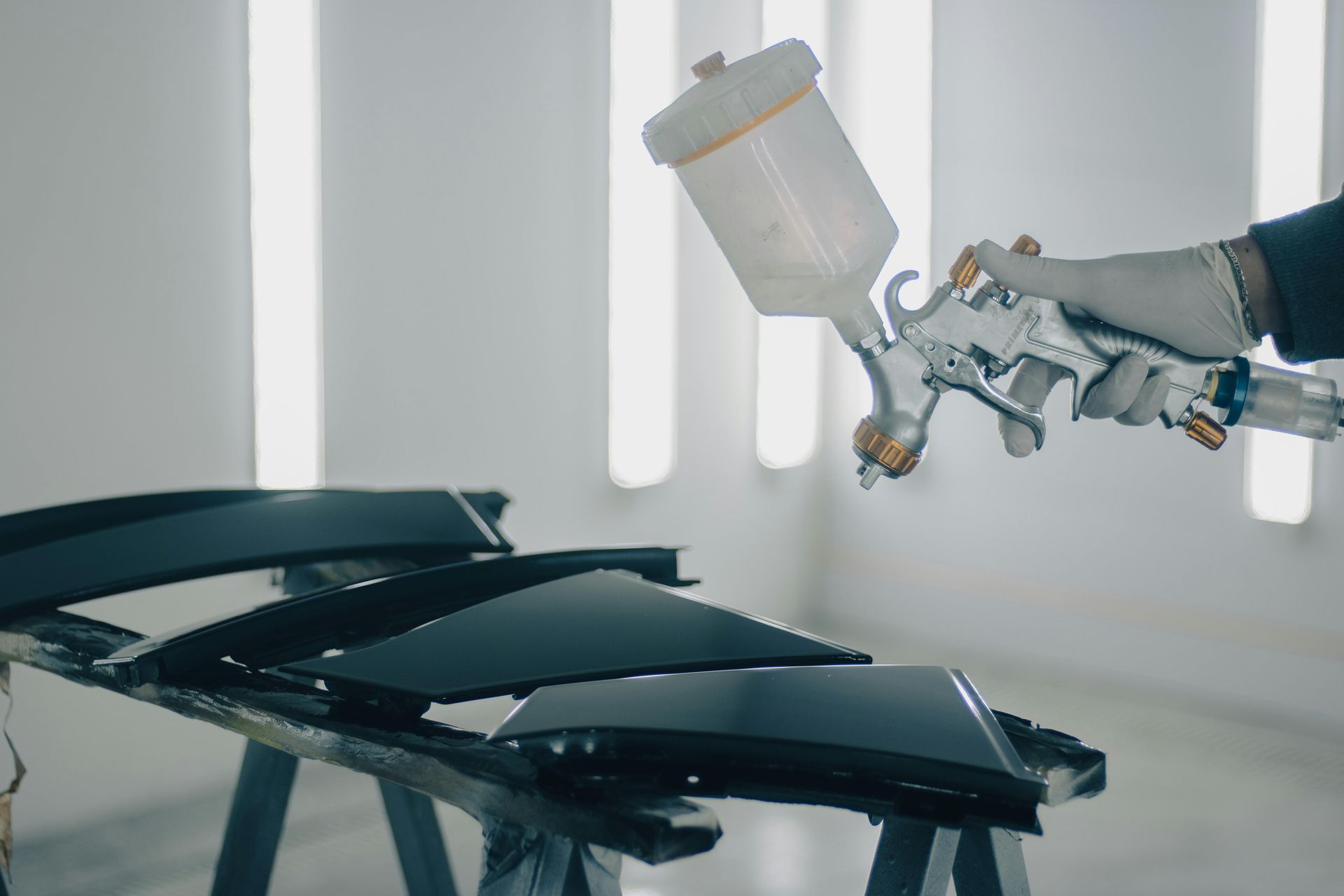
High-volume, low-pressure guns put more of your coating on the part and less into the air, and the gain is measurable. Transfer efficiency must sit near 40 percent for a conventional gun and reach about 61 percent once a trained painter runs an HVLP setup.
3. Technique That Reduces Waste
Equipment only takes transfer efficiency so far, since how a painter holds and moves the gun matters just as much. Gun distance, steady overlap, and proper atomization keep more coating on the surface and less in the exhaust stream.
Filtration Strategies That Support VOC Reduction
Even the most efficient application releases some overspray, and your booth has to catch it before it reaches outside air.
Multi-Stage Capture
Multi-stage filtration works in steps, pulling coarse particulates first and finer solids after, so less escapes with each pass. That staged design matters under the 6H rule, which requires booth filters to capture at least 98 percent of overspray. With a multi-stage system, you’ll be able to clear that bar with room to spare.
Cleaner exhaust also keeps your ductwork and fans clean, which protects airflow over time.
High-Efficiency Media
Your choice of media decides how well the booth balances two competing needs: high capture and steady airflow. Because a booth must hold pressure and pull overspray off the part, media that clog too quickly choke airflow and drag down performance. High-efficiency media hold that balance longer, capturing more while still letting the booth breathe.
Sizing and Maintenance
Even the right media can underperform when a filter is sized wrong or left in too long. Matched to your booth airflow, a filter captures at its rated efficiency; undersized or overloaded, it lets overspray slip through.
The 6H rule also expects documentation proving your filters meet that efficiency, so tracking filter load and changing media on schedule protects both your capture rate and your inspection record.
Integrating Application and Filtration Changes
Application and filtration move together, so a change on one side almost always calls for an adjustment on the other. Getting that coordination right comes down to three habits.
- New coatings, new booth settings: Waterborne and high-solids coatings dry differently, so airflow, temperature, and sometimes added air movement have to be tuned to match.
- Coordinated choices: Set your spray method, booth pressure, and filter selection as one system, since a change to any one shifts the load on the others.
- Trained together: Painters and maintenance staff learn the new setup side by side, so technique at the gun and filter care stay aligned.
Turning Compliance into an Advantage
Shops that fully adopt VOC-friendly practices tend to run leaner, because the same steps that cut emissions also trim cost. Once your compliance record is clean, it becomes something you can put in front of customers.
- Less material, less waste: Higher transfer efficiency and low-VOC coatings mean you buy less paint and generate less hazardous waste to haul away.
- Healthier air: Lower solvent emissions protect your painters and the surrounding community and help you stay within OSHA exposure limits.
- A future-ready reputation: Customers and partners increasingly favor finishers who can document responsible, low-emission operations.
Build a Booth That Meets and Exceeds VOC Compliance Standards
Tighter VOC limits reward shops that treat coating, application, and filtration as one connected system. Pair low-VOC spray application with multi-stage filtration sized for your booth, and you meet the rules while spending less on material and waste. We help operations across automotive, industrial, aviation, fleet, and manufacturing design paint booth filtration for VOCs that hold up to inspection and daily use. Contact GSB Industries today to evaluate your current setup and map a path toward lower emissions and higher efficiency.